Blackjack Online: How to Play, Choose a Casino, and Claim Offers
Last updated: July 2026. Reviewed by the editorial team at pinupcan.com.

Last updated: July 2026. Reviewed by the editorial team at pinupcan.com.
Disclaimer: This guide is for informational and entertainment purposes only. It does not constitute financial, legal, or professional gambling advice. Blackjack is a game with a negative expected value for the player; the house always holds a mathematical edge. If you or someone you know shows signs of problem gambling, please contact the Responsible Gambling Council (Canada) at 1-866-531-2600, or visit ConnexOntario.ca. Minimum legal gambling age varies by Canadian province: 19+ in most provinces, 18+ in Quebec, Alberta, and Manitoba.
Blackjack is a card game played between one or more players and a dealer. The objective is straightforward: build a hand whose total is closer to 21 than the dealer's hand, without going over. Unlike poker, players do not compete against each other. Every hand is an individual contest against the dealer. The best possible hand, called a "blackjack" or "natural," consists of an Ace paired with a 10-value card (10, Jack, Queen, or King) dealt as the initial two cards, and it typically pays 3:2.
What sets this blackjack game apart from most casino titles is the element of player decision-making. After seeing their cards and the dealer's face-up card, players choose whether to Hit (take another card), Stand (keep their current total), Double Down (double the bet and take exactly one more card), Split (divide a pair into two separate hands), or in some versions Surrender (forfeit half the bet to end the hand immediately). These choices create a meaningful layer of strategic depth. They can also encourage an illusion of control.
"Participation in many forms of gambling and the belief that gambling is a good way to make money are key predictors of risk." - NGAGE-2.0 National Survey on Gambling Attitudes and Gambling Experiences, NCPG (2025). ncpgambling.org
Here is the part that matters most: despite the strategic element, blackjack remains a game with a negative expected value for the player. The standard house edge sits at approximately 2%, but drops to roughly 0.5-1% when a player follows basic strategy consistently. The casino retains a mathematical advantage over time, regardless of short-term outcomes.
The shift from physical casino floors to digital platforms has reshaped how millions experience blackjack online. RNG-based online blackjack is available 24 hours a day, 365 days a year, with no need to travel, wait for a seat, or follow dress codes. Computer dealers process hands approximately twice as fast as human dealers, eliminating pauses for chip counting, card shuffling, and other players' deliberation. That speed advantage is attractive, but it also carries risk. Compressed decision-making can lead to faster losses if a player is not disciplined.
"Males were more likely to have spent money on most categories of online casino games in the past four weeks, with the exception of virtual roulette, where females were more likely." - UK Gambling Commission, Key Findings: Online Casino Games (Excluding Slots) (2023). gamblingcommission.gov.uk
Online platforms also offer dozens of blackjack variations: Classic, Atlantic City, European, Spanish 21, Multi-Hand, and more. Table limits range from micro-stakes (as low as $1) to high-roller tables ($5,000+). This variety is rarely matched in brick-and-mortar venues, where floor space constrains the number of available tables and rule sets. The accessibility and speed of online play, however, intersect with behavioural risk factors that players should understand before they play online.
"Young age, high frequency of play, avoidance motivation, and loyalty program membership are key predictors of problem gambling." - Commonwealth of Pennsylvania, 2023 Online Gambling Report. gamingcontrolboard.pa.gov
Access, pace, variety, and privacy. All of these factors are crucial in understanding both the appeal and the risk of playing blackjack online.
Players gravitate toward online blackjack for several overlapping reasons:
Research into the European live dealer market underscores the game's enduring relevance online, emphasizing its "surprising staying power" as digital tastes evolve. Blackjack accounts for approximately 8.1% of the live dealer segment in Europe, on par with roulette and baccarat.
"Blackjack holds about 8.1% of the live dealer segment in Europe, alongside roulette and baccarat." - BlackjackReview, Live Dealer Blackjack Market Growth in Europe (2023-2024). blackjackreview.com
In standard online blackjack, a Random Number Generator (RNG) replaces the human dealer. The RNG is a software algorithm that produces statistically random outcomes for every card dealt. Each hand is independent. The outcome of the previous hand has no influence on the next, which is fundamentally different from a physical shoe where card removal affects probabilities.
The modern interface for RNG blackjack follows consistent UX conventions. The virtual table occupies the centre of the screen, with the player's cards and bet displayed in the lower portion, the dealer's cards in the upper portion, and action buttons (Hit, Stand, Double Down, Split) appearing dynamically based on what options are legally available at any given moment. Chip denominations line the bottom of the screen, and the bankroll updates in real time as bets are placed and resolved.
On mobile devices in 2026, many platforms have adopted gesture-based controls: swipe down for Hit, swipe left for Stand, and pinch for Double Down. A "Bento layout" prioritizes the game area in the central viewport, hiding secondary information (bet history, rules reference) behind a long-press menu. This keeps the interface functional across screen sizes from 6-inch smartphones to 4K monitors.
Regulators require rigorous testing of RNG algorithms before they are deployed. The testing process involves generating approximately one billion output values and subjecting them to frequency analysis, chi-squared tests (requiring p-values above 0.01), Kolmogorov-Smirnov distribution tests, Runs tests for sequential patterns, and entropy evaluations to assess the quality of randomness.
"Regulators require the generation of approximately one billion output values, frequency analysis, chi-squared tests, and entropy evaluations to confirm statistical randomness." - The Square Magazine, RNG Testing in Online Casinos (2023-2024). thesquaremagazine.com
Players should look for casinos that display certification from recognized independent testing labs such as eCOGRA, iTech Labs, GLI (Gaming Laboratories International), or BMM Testlabs. Legitimate platforms provide dated PDF audit certificates with unique identifiers, test dates, and sample sizes. Operators listing only "certified" without documentation should be treated with scepticism.
"Legitimate platforms provide dated PDF audit certificates with identifiers, test dates, and sample sizes." - Pineland, Texas, RNG Auditing and Geolocation in Canadian Casinos (2023-2024). pineland.com
Not every format suits every player. Here is a quick breakdown of who tends to benefit most from each mode.
Online blackjack may be a good fit for players who:
Beginners often find free blackjack the ideal entry point. It lets you learn rules, test the pace of online play, and practise decisions without risking real money. From there, the natural next step is real money blackjack, once you feel confident in your strategy and have chosen a trustworthy casino. Players who prefer a social, immersive feel tend to gravitate toward live blackjack online, while those focused on speed and volume stick with RNG tables. And mobile? In 2026, it is the default. Most sessions happen on a phone, so a smooth mobile experience is a baseline expectation, not a bonus feature.
Online blackjack may not be suitable for players who:
If any of those risk factors apply, please contact a support organization before playing:

| Term | Definition |
|---|---|
| Dealer | The person (or software) that deals cards and manages the blackjack game. |
| Hand | The cards held by a player or dealer during a round. |
| Bet | The amount of money a player risks on a single hand. |
| Hit | A request for one additional card to improve the hand's total. |
| Stand | A decision to keep the current hand total and end your turn. |
| Double Down | Doubling the original bet in exchange for exactly one more card, after which you must stand. |
| Split | Dividing a pair (two cards of equal value) into two separate hands, each with its own equal bet. |
| Surrender | Forfeiting a hand and recovering half the original bet; available at select tables. |
| Insurance | A side bet offered when the dealer shows an Ace, paying 2:1 if the dealer has blackjack. Statistically unfavourable. |
| Table | The playing surface (physical or virtual) where blackjack is conducted, including betting circles and player positions. |
Understanding card values is the non-negotiable foundation of blackjack:
The goal: Beat the dealer by having a hand total closer to 21 without exceeding it. If your total goes over 21, you "bust" and lose immediately, regardless of what the dealer holds. If the dealer busts and you have not, you win. The best hand, a natural blackjack (Ace + 10-value card), typically pays 3:2.
Payouts at a glance:
| Outcome | Payout |
|---|---|
| Win (higher total than dealer, no bust) | 1:1 |
| Blackjack (natural 21 from two cards) | 3:2 |
| Push (tie with dealer) | Bet returned |
| Loss (dealer has higher total, or player busts) | Bet forfeited |
Critical note on 6:5 tables: Some online casinos offer blackjack tables that pay only 6:5 for a natural blackjack instead of 3:2. This single rule change adds approximately 1.4% to the house edge. Always check the payout table before sitting down. A 3:2 game is significantly more favourable.
The dealer follows a fixed protocol with no decision-making freedom:
Once you receive your two initial cards and can see the dealer's face-up card, you choose from the following actions:
"In a fair system, the probability that the dealer's hidden card is a 10-value card corresponds to theoretical expectations, making insurance a negative-expectation bet." - WifiTalents, Live Casino Statistics 2026. wifitalents.com
Research on online betting behaviour confirms that players chasing losses may double down or split more aggressively than basic strategy recommends, particularly after a string of losing hands.
"Players chasing losses may aggressively double bets even in situations where basic strategy does not recommend it." - Between-Session Chasing Study, Online eCasino Transactional Data (2023-2024, peer-reviewed). doi.org/10.1016/j.addbeh.2023.107799
If you remember nothing else, these four principles, drawn from decades of mathematical analysis, will significantly reduce the house edge:
Always split Aces and 8s. Two Aces make a problematic 12; split them and you start two hands at 11. Two 8s make 16, the worst hand in blackjack. Splitting gives you two chances to build something better.
Never split 10s. A pair of 10-value cards gives you 20. That hand wins almost every time. Splitting it is pure greed.
Stand on 12-16 when the dealer shows 2-6. The dealer is more likely to bust with a low card showing. Let the dealer take the risk of going over 21.
Avoid insurance. Over time, the insurance bet loses more than it wins. It is a separate wager with its own negative expectation, regardless of what happens with your main hand.
Bonus tip: When the dealer's upcard is a 7, stand on a pair of 9s. There are four times as many 10-value cards in a deck as any other individual rank. The dealer likely holds 17. Your 18 beats it.
A critical behavioural pattern to recognize when playing blackjack online is "chasing," which means increasing bet sizes or returning to play after losses (or wins) in an attempt to recoup money or capitalize on a perceived streak. Chasing happens both within a single session and between sessions.
"Research shows that chasing is symmetrical: players raise bets both after losses and after wins within a single session." - Within-Session Chasing Study, Online eCasino Transactional Data (2023-2024, peer-reviewed, open access). doi.org/10.1016/j.addbeh.2023.107800
Between-session chasing involves returning to play in subsequent sessions to recoup losses or capitalize on perceived "hot streaks." Both forms are well-documented in transactional data from online casinos. Recognizing this pattern in yourself is the first step toward responsible play. Set a loss limit before every session and stick to it.
Here is a complete walkthrough of one round of online blackjack, useful for beginners who want to visualize the process:
Select a Table: Choose a blackjack variant (Classic, European, Atlantic City, etc.) and confirm the table rules: number of decks, whether the dealer hits or stands on soft 17, whether surrender is available, and the blackjack payout ratio (3:2 vs. 6:5).
Place Your Bet: Select your chip denomination and place it in the betting circle. Online minimums often start at $1. The recommended guideline is to bet 1-2% of your session bankroll per hand.
Receive Your Cards: You are dealt two cards face-up. The dealer receives one card face-up (the "upcard") and one face-down (the "hole card").
Make Your Decision: Based on your hand total and the dealer's upcard, choose to Hit, Stand, Double Down, Split, or Surrender (if available). Consult a basic strategy chart if you are learning. Online play gives you the freedom to reference one without time pressure from other players.
Dealer Reveals and Acts: After all players have completed their turns, the dealer reveals the hole card and follows the fixed dealer rules (hit on 16 or less, stand on 17 or more).
Settlement: Winning hands are paid, losing bets are collected, and pushes are returned. The interface updates your bankroll immediately. If you wish to continue, a new betting round begins.
Players exploring different iGaming platforms will find that this flow is consistent across virtually all providers, with minor visual differences.
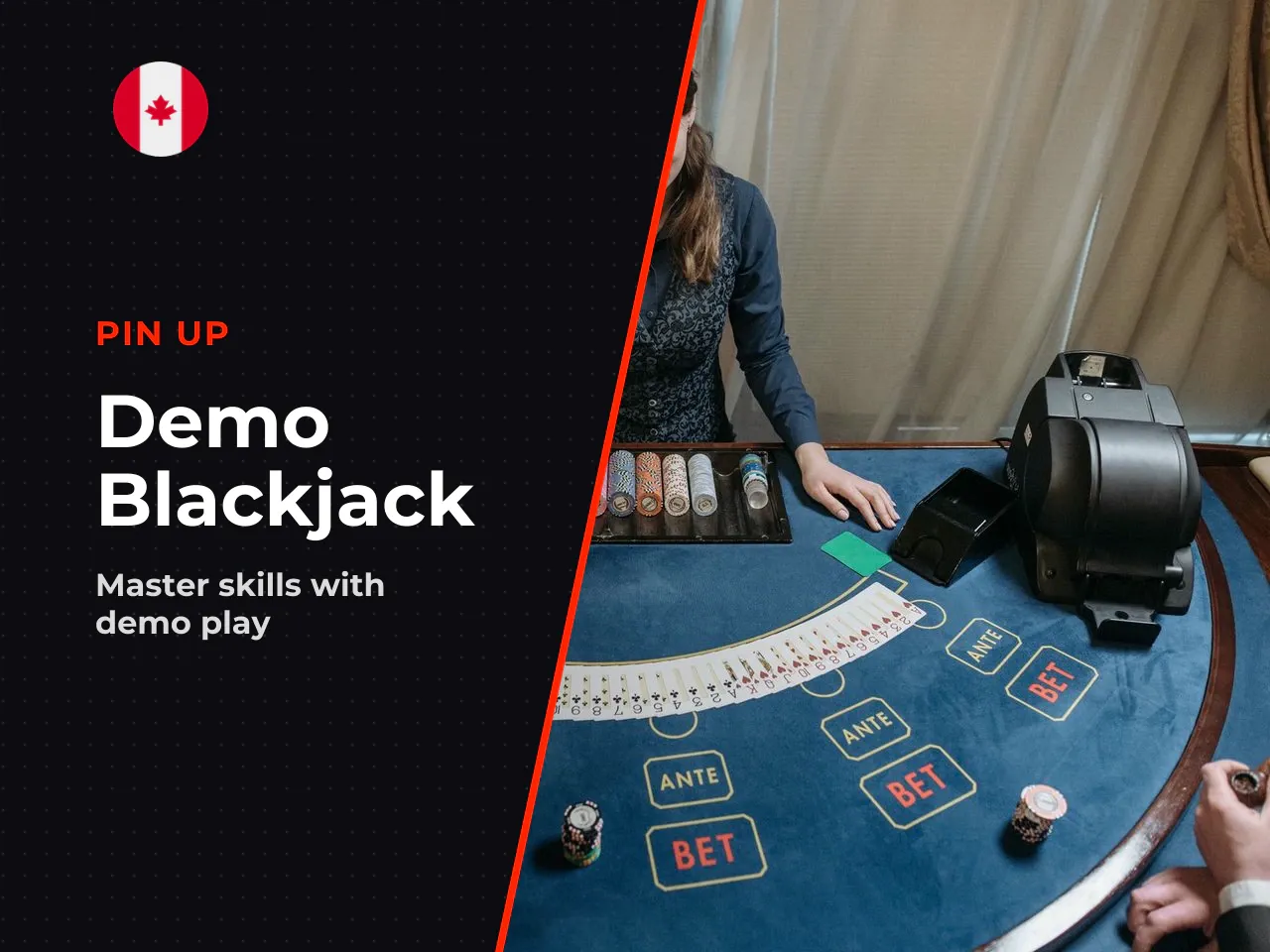
Free (demo) blackjack uses virtual credits instead of real money. The RNG engine is identical to the real-money version, meaning the card distribution and probabilities are the same. This makes demo mode a legitimate training ground for several purposes:
However, free blackjack has a significant limitation: it does not replicate the psychological pressure of real money. The dopamine response to winning and the loss aversion triggered by losing are absent when nothing is truly at stake. Players who perform well in demo mode may find that their decision-making deteriorates under real financial pressure. I have seen this pattern come up again and again in player feedback.
Worth noting: free blackjack games also serve as data collection tools for casinos, even if no money is at stake.
"Free games are 'sandboxes' that allow casinos to collect data on player behavior, preferences, and reactions to game features." - Whitfield Consulting, Free Online Slot Machine Games (2023-2024). whitfieldconsulting.com
The transition from free to real money blackjack introduces several critical changes:
Bankroll Management Becomes Essential. A standard guideline is to have a session bankroll of 30-50 times your minimum bet. If you play at a $5 table, bring $150-$250 for that session. This cushion absorbs the natural variance (short-term swings) inherent in the game. Without it, a brief losing streak can wipe out an undersized bankroll and force poor decisions.
Casino Choice Matters. When real money is involved, the reliability of the platform becomes paramount. Check for valid licensing from a recognized regulator (such as iGaming Ontario in Canada, the UKGC, or the MGA), independently audited RNG certificates, secure payment processing (SSL encryption, trusted gateways), and transparent terms and conditions.
Bonuses Require Careful Evaluation. Many blackjack casino sites offer deposit bonuses to attract new players. The fine print, though, is where things get tricky, especially for blackjack players:
"A typical £10 bonus tied to a 30x wager requires £300 in bets before withdrawal, mathematically unfavorable accounting for the house edge." - Reflex Medical, Real Money Casino Games Free (2023-2024). reflexmedical.com
Game contribution weighting is the hidden trap. Slots typically count 100% toward wagering requirements, while blackjack often contributes only 5-10%. That means a $300 wagering requirement effectively becomes $3,000-$6,000 in blackjack bets. Some casinos exclude blackjack from bonus playthrough entirely. Always read the terms before accepting a bonus.
Bonuses are most useful when: the wagering requirement is low (10x or less), and the blackjack contribution rate is at least 50%. These conditions are rare. Players should evaluate whether the bonus provides genuine value or just looks good on paper.
Disclaimer: The following information is general in nature and does not replace consultation with a responsible gambling specialist or financial advisor.
When playing for real money, setting limits before you begin is non-negotiable:

From 31 October 2025, all UK-licensed gambling operators must prompt customers to set a financial limit before making their first deposit and remind them every six months to review their accounts. From 30 June 2026, a "deposit limit" must be based on the gross amount paid into the account, preventing further deposits once the limit is reached. The most restrictive of any overlapping limits (daily vs. weekly) must always apply. In the United States, 29 jurisdictions with account-based online gaming already require operators to provide self-limitation mechanisms for deposits, losses, and wagering amounts.
Canadian players using provincially regulated platforms in Ontario can access similar tools through iGaming Ontario's responsible gambling framework. These are not optional niceties. They are your primary line of defence against overspending.
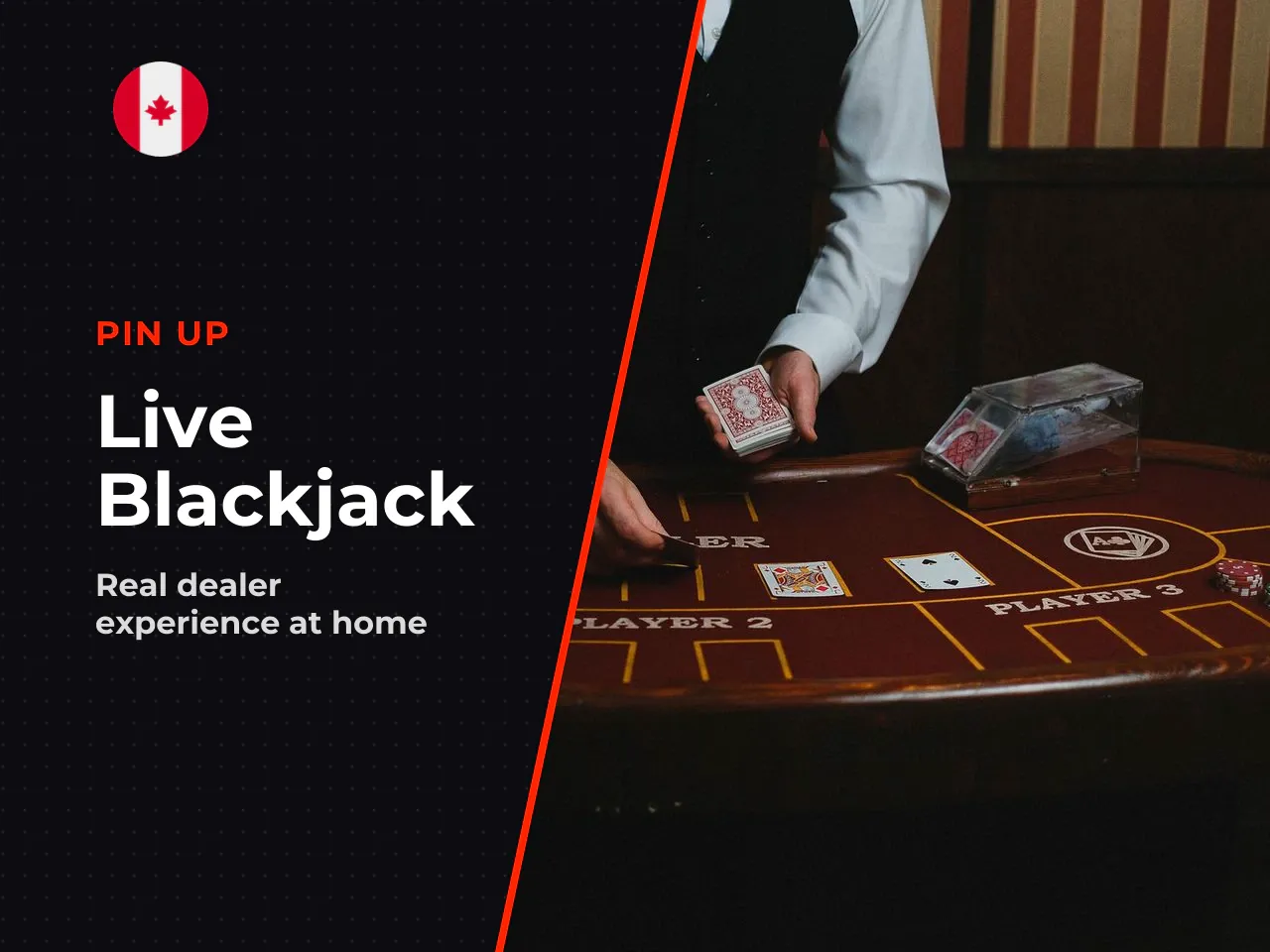
Live dealer blackjack creates an experience that sits between the digital efficiency of RNG play and the tangible atmosphere of a physical casino. The key characteristics include:
Live blackjack continues to hold steady in the live dealer segment, demonstrating sustained player interest in the transparency and real-time energy that live tables provide.
"Blackjack holds about 8.1% of the live dealer segment, demonstrating sustained player interest in transparency and real-time atmosphere." - BlackjackReview, Live Dealer Blackjack Market Growth in Europe (2023-2024). blackjackreview.com

Live dealer tables are available only for real-money play, which means they attract players who already have confidence in their strategy and are seeking an immersive experience. The social component, hearing the dealer speak, watching cards being physically dealt, adds a layer of perceived fairness that pure RNG play cannot replicate. That said, the social aspect can also create time pressure: unlike RNG play, the table moves at the dealer's pace, and other players' decisions affect the rhythm of the game.
In 2026, 8K streaming with sub-250ms latency is becoming standard for top-tier providers. A stable internet connection of at least 5 Mbps is recommended for smooth streaming, with 10 Mbps or higher ideal for HD quality.
"Live blackjack carries a house edge of approximately 0.5% with optimal play, making it one of the least disadvantageous games for informed players." - WifiTalents, Live Casino Statistics 2026. wifitalents.com

Despite the appeal of live dealer tables, standard RNG blackjack is the better choice in several specific scenarios:
Speed and volume. RNG blackjack delivers 150-300+ hands per hour compared to 40-70 for live tables. If you are focused on strategy practice, volume matters. The faster you can run through hands, the faster you internalize correct decisions.
Micro-stakes and budget play. RNG tables commonly start at $1 or less. Live tables often have minimums of $5-$25 or higher. For a player with a limited bankroll, RNG is more accessible.
Uninterrupted strategy practice. There is no dealer banter, no waiting for other players, and no social pressure to act quickly. You can pause between hands to consult a strategy chart. This is ideal for beginners who are still learning optimal play.
Mobile convenience. RNG blackjack tends to be lighter on bandwidth and more forgiving of spotty connections, which makes it a smoother experience on the go.
It is essential to recognize, though, that RNG blackjack's speed can amplify risk by compressing many decisions into short periods. Research confirms that within-session chasing, escalating bets after both losses and wins, is a widespread pattern not limited to clinically defined problem gamblers.
"Within-session chasing is a common pattern not limited to clinically defined problem gamblers: bets increase after both losses and wins." - Within-Session Chasing Study, Online eCasino Transactional Data (2023-2024, peer-reviewed). doi.org/10.1016/j.addbeh.2023.107800
| Feature | Live Dealer Blackjack | RNG Blackjack |
|---|---|---|
| Speed | 40-70 hands/hour | 150-300+ hands/hour |
| Minimum bets | Typically $5-$25+ | Often $1 or less |
| Social interaction | Chat with dealer and players | None (solo play) |
| Technology | Video stream + physical cards + OCR | Software algorithm (RNG) |
| Strategy practice | Limited by table pace | Ideal (pause between hands) |
| Perceived fairness | High (visible card dealing) | Requires trust in RNG audits |
| Availability | Sometimes limited by table capacity | Always available (24/7) |
| House edge | ~0.5% with optimal strategy | ~0.5% with optimal strategy (varies by rules) |
Selecting a trustworthy blackjack casino is the most important decision a player makes, more important than any in-game strategy. Here is a six-point checklist:
Valid licence from a recognized regulator. Players should prefer casinos licensed by recognized regulators such as provincial authorities in Canada (e.g., AGCO/iGaming Ontario), the UK Gambling Commission (UKGC), the Malta Gaming Authority (MGA), or equivalent bodies in other jurisdictions. Players comparing licensed online casinos will find that regulatory status is the first differentiator of trust.
Independent RNG audit certificates. Look for certification from eCOGRA, iTech Labs, GLI, or BMM Testlabs. Request or locate the dated PDF certificate, and verify that it includes a unique identifier, test date, and sample size. Operators listing "certified" without documentation should raise concerns.
SSL encryption and data protection. Standard practice is 256-bit SSL encryption with TLS 1.3 adoption. Certificates must be issued by recognized Certificate Authorities (DigiCert, GlobalSign, etc.) and must be current. Expired or self-signed certificates indicate negligence.
Transparent terms and conditions. Bonus wagering requirements, game contribution weights, maximum bet limits during playthrough, and withdrawal conditions must be clearly stated. If you cannot find them easily, that is itself a warning sign.
Secure and convenient payment options. Look for trusted gateways: Visa, Mastercard, PayPal, Interac (essential for Canadian players), and increasingly, cryptocurrency options. Withdrawal speeds matter: crypto often processes in under an hour; e-wallets within a day; credit/debit cards within 72 hours.
Responsible gambling tools. The casino should offer deposit limits, loss limits, session time alerts, self-exclusion options, and links to support organizations. These are regulatory requirements in most licensed jurisdictions and a basic indicator of legitimacy.
"In 2024, Canada experienced a rise in fraud and strengthened responsible gambling frameworks amid key regulatory decisions in Ontario." - SCCG Management, Canada's Gambling Industry 2024. sccgmanagement.com
When evaluating a blackjack casino online, consider these parameters:
| Criterion | What to Look For | Red Flag |
|---|---|---|
| Blackjack variants | 10+ variants including Classic, European, Atlantic City, Spanish 21, Multi-Hand | Only 1-2 generic titles |
| Live dealer tables | Available 24/7 from reputable providers (Evolution, Pragmatic Play) | No live option or unknown providers |
| Table limits | Range from $1 to $5,000+ | Only high minimums or no published limits |
| Mobile optimization | Responsive design, gesture controls, portrait-mode support | Desktop-only interface, laggy mobile experience |
| Bonuses/Offers | Low wagering (10x or less), blackjack contribution of 20% or more, transparent T&Cs | Blackjack excluded from wagering or 5% contribution |
| Payouts | 3:2 on blackjack as default | 6:5 as default (adds ~1.4% to house edge) |
A quick note on bonuses: per Reflex Medical (2023-2024), a typical bonus may require 30x wagering, so evaluate carefully. The headline number can look generous while the actual value for blackjack players is slim.
A common concern among new online players is whether digital blackjack is "rigged." For licensed and audited casinos, the answer is no. But verification is the player's responsibility.
"Legitimate Canadian platforms provide dated PDF certificates from GLI or eCOGRA with sample sizes and test dates within one business day." - Pineland, Texas, RNG Auditing and Geolocation in Canadian Casinos (2023-2024). pineland.com
Unlicensed or offshore casinos that operate without regulatory oversight are a different matter entirely. Without mandated testing and accountability structures, there is no guarantee of fair play. This is why licensing should be the first criterion in any casino selection process.
Canada's gambling laws are defined by the federal Criminal Code and administered by provincial governments, each with its own regulatory framework. Ontario stands out as the only province with a fully regulated market for private online gambling operators, managed through iGaming Ontario (iGO), a commercial subsidiary of the Alcohol and Gaming Commission of Ontario (AGCO).
Key facts about the Ontario market:
"Canada's 2023 gambling report records significant growth in online casino, including live dealer and RNG games, as key market segments." - Canadian Gambling Report 2023. canadiangamblingreport.ca
Outside Ontario, most provinces operate through government-run platforms (such as PlayNow in British Columbia, or Loto-Quebec's Espacejeux in Quebec). Some Canadian players access international sites, but these operate without provincial licensing or consumer protections.
Canadian players evaluating online blackjack Canada platforms in 2026 tend to prioritize several factors:
"Legitimate platforms request GPS permissions on mobile devices and display permission prompts, confirming compliance with provincial restrictions." - Pineland, Texas, RNG Auditing and Geolocation in Canadian Casinos (2023-2024). pineland.com
Withdrawal speed: Players care deeply about how quickly they can access winnings. Top-tier platforms process withdrawals within hours (crypto/e-wallet) or 1-3 business days (bank transfer/card).
Geolocation accuracy: Whether geolocation systems operate smoothly, without frequent false negatives or intrusive checks, matters for user experience, particularly in Ontario where provincial boundaries determine access.
Before depositing at any online casino, verify:
Researchers have developed specialized tools to measure problematic online gambling behaviour. The Online Problem Gaming Behaviour Index is a psychometric instrument that assesses patterns of risky play specific to the digital environment. The index demonstrates high internal consistency and correlates with other measures of gambling harm through factor analysis and validation studies.
"The index demonstrates high internal consistency and correlates with other measures of gambling harm through factor analysis and validation." - Online Problem Gaming Behaviour Index Development Study (2023-2024, academic, peer-reviewed). doi.org/10.1016/j.addbeh.2023.107801
This tool provides researchers, and potentially operators implementing responsible gambling screening, with a method to identify at-risk players before significant harm occurs.
Transactional data from online casinos further reveals the complexity of chasing behaviour. Both losses and wins provoke returns to play or bet escalation in subsequent sessions, undermining simplistic notions that only losses lead to risky escalation.
"Transactional data from online casinos show that both losses and wins provoke returns to play or bet escalation in subsequent sessions." - Between-Session Chasing Study, Online eCasino Transactional Data (2023-2024, peer-reviewed). doi.org/10.1016/j.addbeh.2023.107799
Knowing the research is one thing. Applying it is another. Here are concrete steps you can take before and during any blackjack session:
If you notice that you are spending more time or money than you planned, or if the game stops feeling like entertainment, reach out:
Disclaimer: The following information is general in nature and does not replace consultation with a specialist. If you notice signs of problem gambling, please contact a support hotline.
Both. You cannot control which cards are dealt, that is luck. But you can control how you respond to them, and that is skill. Basic blackjack strategy, which dictates the mathematically optimal action for every possible hand/dealer combination, can reduce the house edge to approximately 0.5% with optimal play.
"Live blackjack carries a house edge of approximately 0.5% with optimal play, one of the most favorable ratios among available online casino games." - WifiTalents, Live Casino Statistics 2026. wifitalents.com
Even with perfect strategy, the house retains an edge. Blackjack is not a reliable way to make money. It is a form of entertainment with a built-in cost.
Practically, no. In RNG blackjack, the virtual deck is shuffled before every hand, making card counting impossible. There is no running count to track. In live dealer blackjack, continuous shuffling machines (CSMs) or frequent manual shuffles are standard, severely limiting any count-based advantage.
"RNG testing confirms the independence of each card deal: frequent reshuffling and continuous shuffle mechanics make card counting practically inapplicable online." - The Square Magazine, RNG Testing in Online Casinos (2023-2024). thesquaremagazine.com
Yes. In Ontario, players can access licensed and regulated online casinos through iGaming Ontario's framework. In other provinces, government-run platforms (e.g., PlayNow, Espacejeux) offer blackjack. Some Canadians also access international sites, but these lack provincial consumer protections.
A 3:2 payout means a $10 blackjack bet wins $15. A 6:5 payout means the same $10 bet wins only $12. The difference, $3 per natural blackjack on a $10 bet, may seem small, but it adds approximately 1.4% to the house edge over time. Always prefer 3:2 tables.
Look for three things: (1) the casino holds a licence from a recognized regulator, (2) the RNG has been certified by an independent lab (eCOGRA, GLI, iTech Labs), and (3) the certification documents are publicly accessible and dated. If you cannot verify these, play elsewhere.
Start with this: stand on 12-16 when the dealer shows 2-6, and hit 12-16 when the dealer shows 7 through Ace. This single rule addresses the most common decision point in blackjack and will immediately improve your results compared to guessing.
RTP stands for Return to Player. It is the theoretical percentage of wagered money returned to players over time. For example, a blackjack game with 99.5% RTP means the house edge is 0.5%. RTP is a long-term statistical average, not a guarantee for any individual session. It is a useful number for comparing games, but it does not predict your personal results.
This guide is maintained by the editorial team at pinupcan.com and reflects publicly available data as of July 2026. For more on the iGaming landscape, explore our dedicated coverage.